

What should you do if your special isn’t on the ledger?
We see this accounting issue constantly across both commercial and residential portfolios. You must immediately pull your signed lease addendum and compare it to the portal ledger to locate the missing apartment specials credit.
A recent 2026 study by Komod.ai highlights that lease errors cost real estate operators thousands of dollars per location annually.
Our team usually finds that these missing credits are simply scheduling errors. This problem gets resolved quickly once someone points directly to the contract terms. The steps below work whether the credit is missing, smaller than promised, or applied to the wrong month.
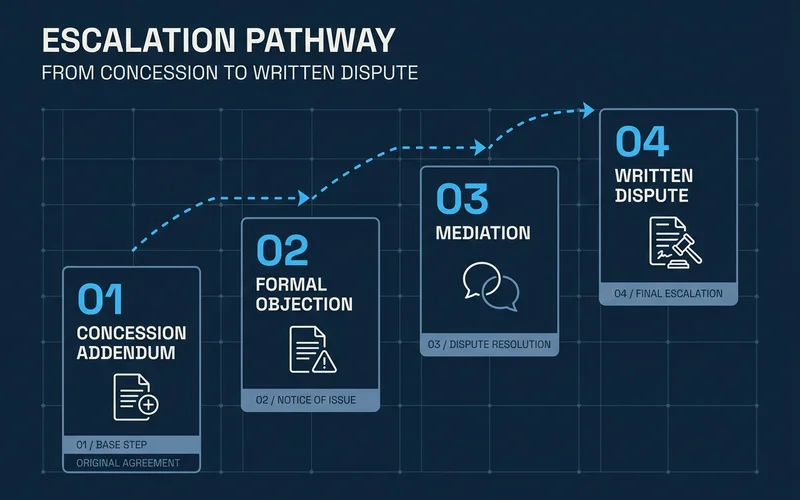
Step 1: Read the concession addendum
We always tell clients to read the concession addendum first to verify the agreed terms. Your special lives in this specific document attached to your lease. Standard property management forms, like the widely used Blue Moon lease, dictate these exact discount parameters.
Our lease auditors recommend checking the paperwork for three specific conditions.
- The total amount, calculated in weeks, dollars, or a percentage of the effective rent.
- The application timeline: upfront at move-in, a specific later month, or prorated across the entire term (upfront vs prorated specials explains how each one posts).
- The contingency clauses: minimum term limits, move-in deadlines, or required autopay enrollment.
Many property management software systems rely on manual data entry, creating structural errors. If your addendum specifies a month-two concession, the system will not show it during month one.
Step 2: Check the ledger at day 7 and day 30
Our process involves logging into the resident portal to review every charge and credit at specific intervals. You should check the ledger around day 7 and day 30 after move-in. Popular management platforms like Yardi or ResidentIQ process these updates at different speeds.
Our staff looks for a specific line item labeled as a concession, credit, or special. Compare this posted amount directly to the terms in your addendum. Any discrepancy at the 30-day mark requires immediate attention.

Step 3: Raise it in writing
We advise sending a short written message to the leasing office through the portal or by email immediately. A written request creates a permanent record, whereas a conversation at the front desk leaves no paper trail. This documentation protects you if the landlord didnt honor special discounts due to a system glitch.
Our standard template includes four essential pieces of information for the property manager.
- Your name, unit, and lease start date.
- The special from the addendum, quoted exactly.
- What the rent ledger error shows instead.
- What you are asking for, applied by a specific date.
Make sure to attach a clear copy of the addendum page. Keep a personal copy of this entire communication thread for your files. Our team strongly recommends clarifying payment deadlines immediately.
Ask about the due date too
If rent is due before the fix, ask in writing how to handle the disputed amount. Our researchers note that national average late fees sit around 8 percent of the monthly rent in 2026, so get an answer before the deadline.
State limits vary widely, such as the strict 10 to 12 percent cap required by Texas Property Code Section 92.019. A flat fee combined with daily charges can quickly exceed these legal boundaries if a dispute drags on.
Step 4: Escalate if it isn’t fixed
We recommend moving up the chain of command if the leasing office ignores your initial written request. Property managers face immense pressure to keep their effective rent numbers high, sometimes causing them to push back on valid concessions. Escalation forces a fresh set of eyes onto the apartment concession not applied issue.
Our standard escalation path involves three specific avenues for resolution.
- To the property manager or regional manager, in writing, with your first message attached.
- To our team, allowing us to take it up with the community in writing and report back.
- To outside help, such as Legal Aid of NorthWest Texas or BASTA, for advice on your rights.
Prompt action prevents an erroneous chargeback from damaging your rental history. Legal Aid organizations frequently handle these exact contractual disputes.
How do you prevent this?
We tell every client to secure their promises in writing before signing anything. The best defense against a move in special not applied ledger error is a perfectly documented lease agreement. Verbal agreements hold zero weight when an automated system generates your monthly bill.
Our lease red flags guide covers the full addendum check we run at the Sign stage.
| Before signing | Why |
|---|---|
| Get the special in the addendum, not just an email | The addendum is part of the lease |
| Confirm the exact amount and month | Avoids timing surprises |
| Note any conditions | Autopay or term rules can void a special |
| Save the listing and quote | Shows what was advertised |
This simple verification stops most billing issues before you even unpack your boxes. Protecting your financial interests starts at the negotiation table.
Where we fit in
We confirm the special in writing before you sign, then check your ledger at day 7 and day 30 after move-in. Missing a step can lead to expensive miscalculations later in the year.
This structured review process ensures the first written request goes out immediately if something looks wrong.
Our team handles these frustrating back-and-forth emails for you. You can stop worrying about bad billing practices today. Get my shortlist to ensure your property is covered from day one.