
Which lease clauses cost renters money later?
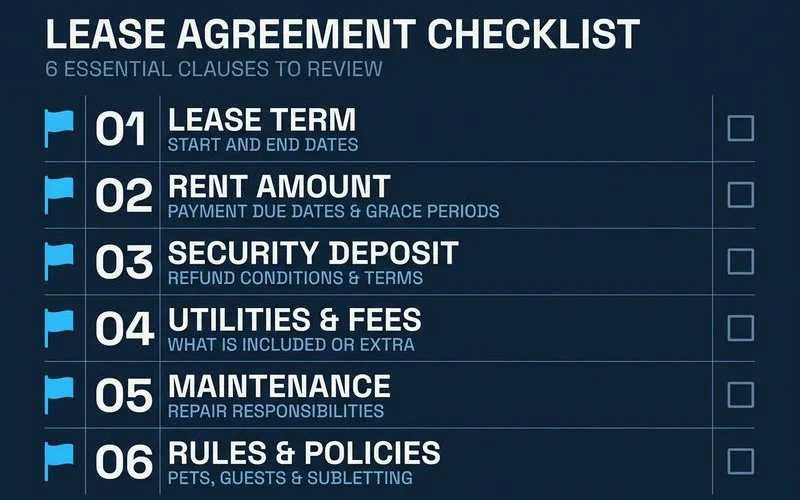
You know how quickly a simple relocation can turn into a frustrating legal maze. Spotting apartment lease red flags texas style requires looking past the standard paperwork. Most lease problems at new apartments in Dallas trace back to a handful of clauses that renters simply skim.
New buildings typically use the standard 2026 Texas Apartment Association lease, plus hefty addenda for specials, fees, and utilities.
Those addenda are where the real financial risks hide for homeowners building a house or business owners seeking corporate housing. We always read the concession and fee addenda closely at the signing stage.
The minimum term and the §92.0135 flood notice are two major items to flag. Let’s look at the data, what it actually means for your bottom line, and explore a few practical ways to respond before you sign.
1. Concession repayment
The rent special lives in a concession addendum. This document outlines the actual discount you receive, which in the 2026 Dallas market often ranges from four to eight weeks of free rent. Reading three specific details in this addendum will protect your wallet.
- The minimum term. The special might require a 13, 15, or 18-month commitment, not the standard 12 months you expected.
- When the credit applies. The discount could hit upfront, spread evenly across the term, or land on one specific month.
- Repayment if you leave early. Many addenda require you to handle a full concession addendum repayment if you break the lease.
Upfront specials carry significantly more repayment risk than prorated ones. Our apartment specials page explains the exact difference in detail.
The question to ask
“If I leave in month 8, what exactly do I owe?” Get the answer in dollars, and get it in writing.
2. Water billing and RUBS
Many new buildings bill water directly back to residents through third-party companies like Conservice. Two common methods dictate how much you will pay each month.
- Submetering: Your specific unit has its own meter tracking exact usage.
- RUBS (Ratio Utility Billing System): The building’s entire bill is split by a formula, often based on square footage or the number of occupants.
Texas rules under 16 TAC Ch. 24 require the property to disclose their specific allocation method and make past bills available for review. The 9% service charge cap applies exclusively to submetered water. We always recommend asking for the specific formula and a recent average bill for a unit identical to yours.
Single-occupant apartments using rubs water billing texas style often see combined water, sewer, and trash bills ranging from $75 to $115 per month in 2026. These high costs usually stem from heavy fixed base charges passed down from the city.
3. Renewal terms
Renewals price from the base rent, not the discounted special rate. You must check a few critical details to avoid a massive price spike at the end of your term.
- The notice deadline. You usually need to declare your intent to renew or move out 60 days before the lease ends.
- Automatic month-to-month terms. Falling into this trap often carries a steep premium, typically adding $100 to $300 on top of your base rent.
- Whether the special repeats. It almost never repeats at renewal time.
Even in a stabilizing 2026 rental market, that base rent calculation catches many people off guard. Our year-two guide shows exactly how steep the jump can be.
4. Early exit and the military waiver
Read the early termination clause carefully before signing anything. Many standard Texas leases set a steep exit fee, often equal to a month’s rent or more, plus any required concession repayment.
Texas property laws cap the reletting fee at 85% of your highest monthly rent to cover the landlord’s costs of finding a new tenant. Federal law, specifically the Servicemembers Civil Relief Act, lets qualifying military personnel end a lease early without penalty. The lease should state this military waiver clearly.
Our break or wait guide runs the math to help you make a logical choice.

5. Fees and late fees
Compare the fee lines in the main lease and addenda with the written fee sheet you received before applying. Anything new or unexpected is worth a serious question. Check the late fee amount and the exact day it triggers.
Texas Property Code Section 92.019 strictly caps late fees to protect renters. Large apartment complexes with more than four units can only charge up to 10% of the rent amount. The law also mandates a full two-day grace period after the due date before any fee applies.
You should also watch for mandatory service charges that quietly inflate your budget. These frequent culprits include:
- Valet trash: Usually adds $25 to $35 monthly.
- Package lockers: Often a $10 to $15 monthly fee.
- Admin billing fees: Small $3 to $5 charges just to process your rent.
Our required fees guide lists all the common lines you will encounter.
6. The flood notice
Texas Property Code §92.0135 requires landlords to provide a specific 100-year floodplain disclosure at or before signing. This rule, originating from HB 531, became effective on January 1, 2022.
A recent update, SB 2349, added a strict signature requirement for both parties starting September 1, 2025, while exempting short-term leases under 30 days. Every address on the current market board is FEMA Zone X, and six locations are levee-reduced.
Our flood notice guide explains exactly what this designation means for your renter’s insurance.
Clauses specific to new buildings
New construction adds a few crucial lines to watch closely, especially at lease-up apartments. Delays are common in 2026, so you need to know your exact rights if the building falls behind schedule.
| Clause | What to check |
|---|---|
| Move-in date | What happens if your unit isn’t ready. The standard TAA lease often allows you to terminate and get a full deposit refund if delayed. |
| Construction | Noise hours and access rules while other phases finish around you. |
| Amenities | Whether your base rent assumes full access to amenities that aren’t open yet. |
| Move-in condition | The deadline to report cosmetic defects, which is often a tight 48-hour window. |
We highly recommend documenting every surface with photos the moment you receive the keys. This simple step prevents arguments over construction dust or scuffed floors later on.
What if something goes wrong after you sign?
Sometimes problems surface even after a careful review. If a promised special fails to show on your ledger, an undisclosed fee appears, or your agreed move-in date slips, you must act quickly.
We always take the issue up directly with the community in writing and establish a clear paper trail. Documenting everything gives you serious leverage if the dispute escalates. Texas small claims courts can handle disputes up to $20,000, which covers almost all unreturned deposit or illegal fee issues.
If you need more formal legal assistance to resolve a breach of contract, several excellent resources exist. The attorneys at Legal Aid of NorthWest Texas and BASTA provide specialized tenant support for these exact situations.
What’s the next step?
Knowing exactly what to check before signing apartment lease agreements prevents costly surprises down the road. Send the full lease and all addenda to our office before you finalize anything, and the team will flag these six crucial items.
You can also get my shortlist right now, and we will handle the entire document review as a standard part of the signing stage. Protecting your finances from apartment lease red flags texas style is much easier with an expert second set of eyes.