
We frequently work with homeowners and business leaders securing corporate or transitional housing in Dallas. A common challenge involves interpreting a texas apartment flood disclosure notice and federal flood maps correctly.
The resulting confusion can easily delay a corporate lease signing.
Our experts want to clarify these FEMA labels and explain recent Texas lease regulations. Let’s look at the data and explore a few practical ways to respond.
What flood zone are new board buildings in?
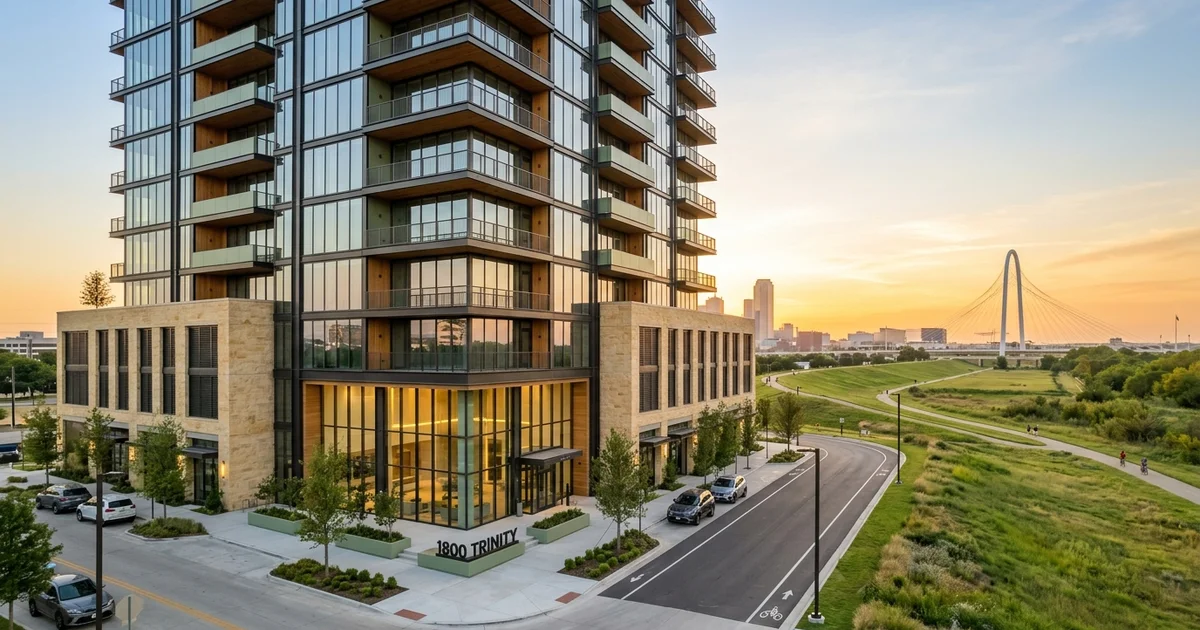
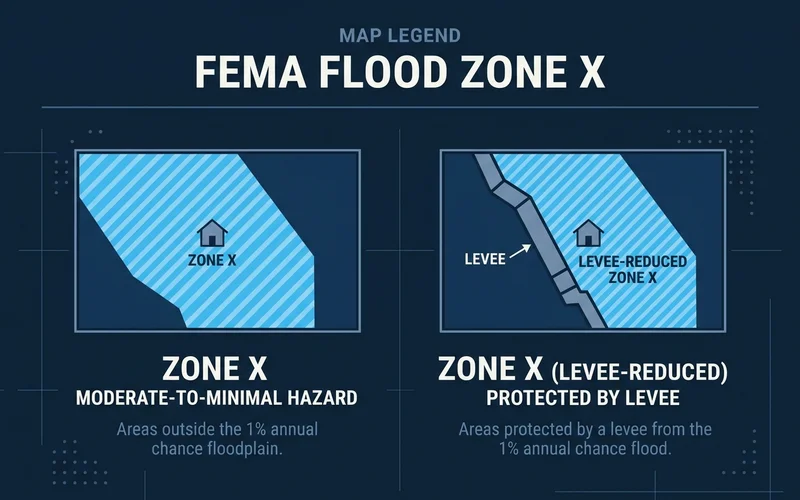
Every address on the New Build Board sits in FEMA Zone X, the lower-risk category on federal flood maps. Six of those addresses fall into a specific levee-reduced Zone X.
Our team verified that this label means the area is mapped as lower risk because a physical levee actively reduces flooding there. The U.S. Army Corps of Engineers protects about 17,000 acres of downtown Dallas real estate with this system.
We advise clients that evaluating a levee zone x apartment dallas requires a clear understanding of these facts. A basic knowledge of this label is essential before you sign any lease.
What do the flood zone labels mean?
Zone X indicates a moderate to minimal flood risk on official FEMA maps. Levee-reduced Zone X means a structure benefits directly from flood control infrastructure.
Our local insights confirm that the Trinity River levees protect large parts of downtown Dallas and nearby neighborhoods. The city recently invested in the 277K levee raise project to sustain massive water flows.
| Label | What it means | On our board |
|---|---|---|
| Zone X | Moderate to minimal flood risk on FEMA maps | All addresses |
| Levee-reduced Zone X | Lower risk because a levee reduces flooding | Six addresses |
| Zones A and AE | Higher-risk flood areas | None |
These massive levees undergo regular inspections, but no concrete structure removes natural risks entirely. Active pump stations, like the upgraded Pavaho station, manage stormwater drainage during heavy spring rains.
We monitor these municipal upgrades because they directly impact the safety of ground-floor units. Our advice is to treat these labels as helpful context rather than an absolute guarantee.
What we show
The flood zone is part of each building’s durable profile. At the six levee-reduced addresses, the profile carries a flood note so you see it before you tour.
What does the Texas flood notice require?
Texas Property Code §92.0135 requires landlords to give tenants a written flood disclosure notice before signing. This critical document reveals whether the owner knows the unit sits in a 100-year floodplain or has flooded in the past five years.
We track two specific legislative bills that shape this requirement for property owners and renters:
- HB 531 (effective Jan 1, 2022) established the baseline requirement to disclose FEMA map status and recent flood history.
- SB 2349 (effective Sept 1, 2025) forces both the landlord and tenant to physically sign the notice to ensure compliance.
- Exemptions apply to corporate leases shorter than 30 days or specific sale-contingent occupancies.
The required notice must arrive at or before signing the lease agreement. Failure to provide this addendum allows a tenant to break the lease if a flood causes substantial property loss.
Our leasing experts flag the 92.0135 flood notice directly in your lease packet at the Sign stage. A quick review of our lease red flags guide covers the other mandatory clauses you should check.

Does renters insurance cover flood?
Standard renters insurance typically excludes all flood damage in Texas. A basic policy covers fire, theft, and accidental burst pipes, but it will not pay for rising natural waters.
Our business clients often assume their standard corporate policy includes this protection. Renters insurance flood texas guidelines under House Bill 531 actually require landlords to inform you that normal policies lack this coverage.
The Cost of NFIP Coverage
We recommend purchasing a separate “contents-only” policy for reliable protection. These specific policies are available through the National Flood Insurance Program (NFIP) or private market insurers.
Recent 2026 data shows exactly what a renter can expect to pay for NFIP protection in a moderate-risk area:
- Average Annual Cost: Roughly $400 to $680 per year in Zone X.
- Monthly Breakdown: About $33 a month for reliable coverage.
- Coverage Limits: Up to $100,000 in personal property protection.
Policy Timing and Requirements
Many new buildings require general renters insurance before you move in. You must verify whether your specific community requires this additional flood addendum.
Our property management contacts confirm that a separate flood policy usually features a strict 30-day waiting period before taking effect. Plan ahead to ensure your assets stay protected from day one.
Which questions should you ask a levee-zone building?
Asking the right questions prevents costly surprises during the rainy season. Property managers expect informed inquiries from experienced homeowners and business leaders.
We suggest asking these four specific questions before paying a deposit:
- Has the building structure or surrounding site had any documented flood events?
- Which floor is the designated corporate unit on, and where is the primary garage?
- Where do residents safely move their cars during heavy spring rain warnings?
- Does the community’s required liability insurance standard include flood coverage?
A quick conversation about drainage infrastructure reveals a lot about the management company. Specific details about the garage elevation matter more than the general FEMA label.
Our team prefers properties that have a proactive severe weather parking plan in place.
How does this affect your decision?
For most homeowners and business owners, Zone X is a minor fact to note rather than a complete deal-breaker. The specific elevation of your unit dictates your actual daily risk.
We find that the ground-floor apartments and subterranean garage parking spots carry the most practical vulnerability. Heavy local rainfall causes temporary street ponding far more often than river flooding.
If potential water damage worries you, renting an upper-floor unit provides a simple and immediate fix. Essential community facts like the local school district and the official flood zone are simply reported data points. Special districts work the same way; see MUD and FWSD buildings for what that label means for renters.
We never use these fixed geographic labels to calculate scores. The Dallas New Build Score evaluates properties on other performance metrics.
What’s the next step?
You should secure all property facts before making a final housing commitment. Direct access to data simplifies the entire corporate relocation process.
We can pull the exact flood note for any Dallas building you are currently considering.
Send that specific address to us, or get our shortlist to view a curated selection of properties. Our customized reports will include these vital profile facts for every single building on your list.