
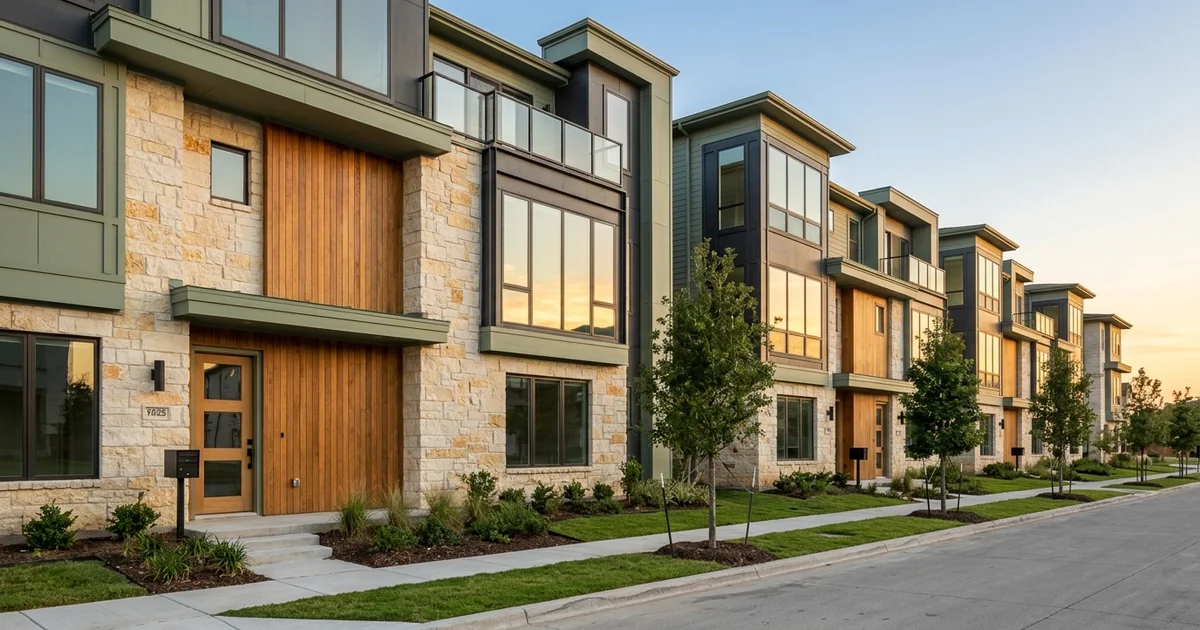
Our team frequently fields questions about the shift in local housing options. You probably notice how fast the landscape is changing if you track the build to rent vs apartment dfw market.
That 2026 market data reveals a clear divide between these two popular property types.
We are going to examine the hard numbers behind both choices. Let’s look at the data and explore a few practical ways to respond.
What is a build-to-rent community?
A build-to-rent (BTR) community is a group of new townhomes or small homes built to lease, not to sell. You get a private entry, often a garage and a fenced yard, with professional management like an apartment.
DFW Market Growth
According to a Q2 2026 Northmarq report, the Dallas-Fort Worth sector now holds over 29,000 BTR units. That inventory makes DFW the second-largest BTR market in the nation.
Our clients find that prominent builders like NexMetro and AHV Communities dominate these high-growth areas. This rapid expansion is clearly visible across northern submarkets like Anna, Celina, and Denton.
Every BTR community on the New Build Board is ground-up new construction, same as the apartments. BTR labels on our board apply at parcHAUS, Oxenfree, YardHomes, Crestview Townhomes, Frontera Shores, Meadowlark and Sonata Estates.
How do BTR homes and apartments compare in a build to rent vs apartment dfw analysis?
Our verdict is to pick BTR if a yard, a garage, or no shared ceiling is worth more to you than luxury amenities and a shorter commute. Pick a mid-rise if you want less upkeep and a location closer to job centers.
A typical one-bedroom Dallas apartment averages between $1,400 and $1,600 per month in 2026. We always advise clients to verify square footage differences, as BTR houses generally range from $1,800 to $2,400 for a much larger footprint.
Then check true monthly costs because the price gap is often smaller or larger than it looks.
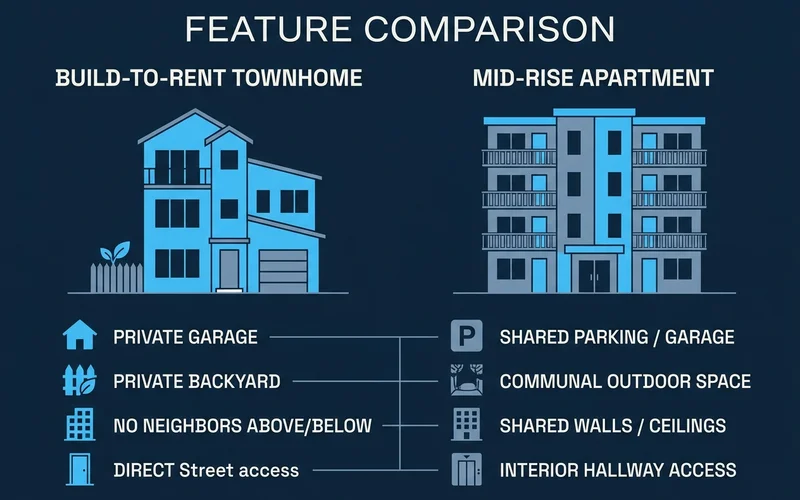
| Feature | BTR townhome or home | Mid-rise apartment |
|---|---|---|
| Yard | Often private and fenced | Shared dog park or courtyard |
| Garage | Often attached | Garage space, sometimes extra cost |
| Shared walls | Side walls, rarely a ceiling | Walls, floor and ceiling |
| Amenities | Lighter: pool, small clubhouse | Gym, pool, lounges, package rooms |
| Utilities | Usually billed to you directly | Often some billed through the property |
| Location | Often suburban edges | Closer to job centers and rail |
The real comparison is true monthly
Base rent for a BTR home may run higher, but you might skip a separate garage fee. Utilities may run higher in a larger space. Put both on the same line before you decide.
How do fees and utilities differ?
Property fees and utility structures vary drastically between the two housing types. You will typically pay for your own direct utility usage in a rented house, while apartments often bundle services.
Fees
BTR communities use different fee lines. You may see yard care, trash, or a smart-home package instead of the standard $25 to $35 valet trash fees common in apartments.
At 12 board buildings, required fees ran $43 to $226.88 a month, median $141.50 (fee survey, Oct 25, 2026). Our team recommends getting the BTR community’s fee sheet and comparing it line by line.
This simple step prevents budget surprises during your lease term.
Utilities
In a BTR home, you usually set up electric, water, and internet yourself. The Texas average residential electricity rate hit 15.94 cents per kilowatt-hour in October 2026.
We emphasize this rate because a larger BTR floor plan requires significantly more power to cool during the summer. Electric options depend entirely on your specific address.
Frontera Shores in Lewisville is a TNMP address where you choose a plan. Other BTR communities may be on CoServ with no choice.
Our electric guide covers both scenarios in detail.
Which renters lean toward BTR?
Renters choose BTR for specific needs like space, privacy, and pet accommodations. Families and remote workers are driving the massive demand for these detached units.
Our list breaks down the main drivers behind this housing choice:
- Pets. A fenced yard beats a shared dog park for many dog owners. Our pets guide covers pet rent and rules.
- Storage and a garage. Tools, bikes, or a second car fit perfectly in an attached space.
- Fewer shared surfaces. No neighbor above or below means a quieter living environment.
- Working from home. Extra rooms and a quieter setting accommodate the permanent remote work trend.
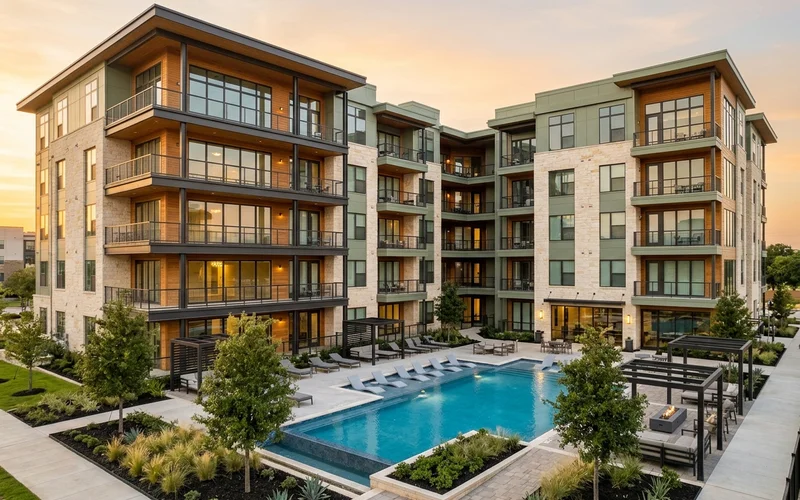
Renters lean toward mid-rise when they want a short commute, rail access, expansive gyms, or less to maintain.
What about the commute?
Location is the biggest trade-off for renters moving into standalone rental houses. Many BTR communities sit on the suburban edges where land costs less. Our data shows developments in places like Melissa or Celina often require a 40-mile trek into downtown Dallas.
That location strategy can mean a much longer drive or a tolled route into the city core. A DNT commute from Frisco to downtown runs $297.78 a month with a TollTag (NTTA, through June 30, 2027).
We remind every client to factor in these hard transportation costs. If you work downtown, that toll expense can outweigh any rent difference. Our toll cost guide has the exact calculation method.
How do specials compare?
Both property types offer move-in incentives, but urban apartments typically feature more aggressive discounts. BTR communities in lease-up use specials too.
2026 Lease-Up Trends
Our research indicates new Dallas apartment developments frequently offered four to ten weeks of free rent in late 2026, while BTR neighborhoods usually capped their offers around two to four weeks free.
Decode both the same way by doing the math. You can calculate the true cost using this formula: net effective = (base × months − free rent) ÷ months, then add fees and year two.
Our 24-month comparison guide shows how to compare two buildings over two years.
What’s the next step?
The choice between a btr homes dallas location and an urban apartment comes down to your daily priorities. Tell us whether you’re leaning toward a townhome for rent new construction dfw, a mid-rise, or if you are undecided.
We will price both on true monthly, with the commute included, and tell you which one we’d sign. A build to rent community dallas gives you space, while apartments offer convenience.
The build to rent vs apartment dfw decision relies on your specific lifestyle needs. Make your choice easier by reviewing the numbers side by side. Get my shortlist.