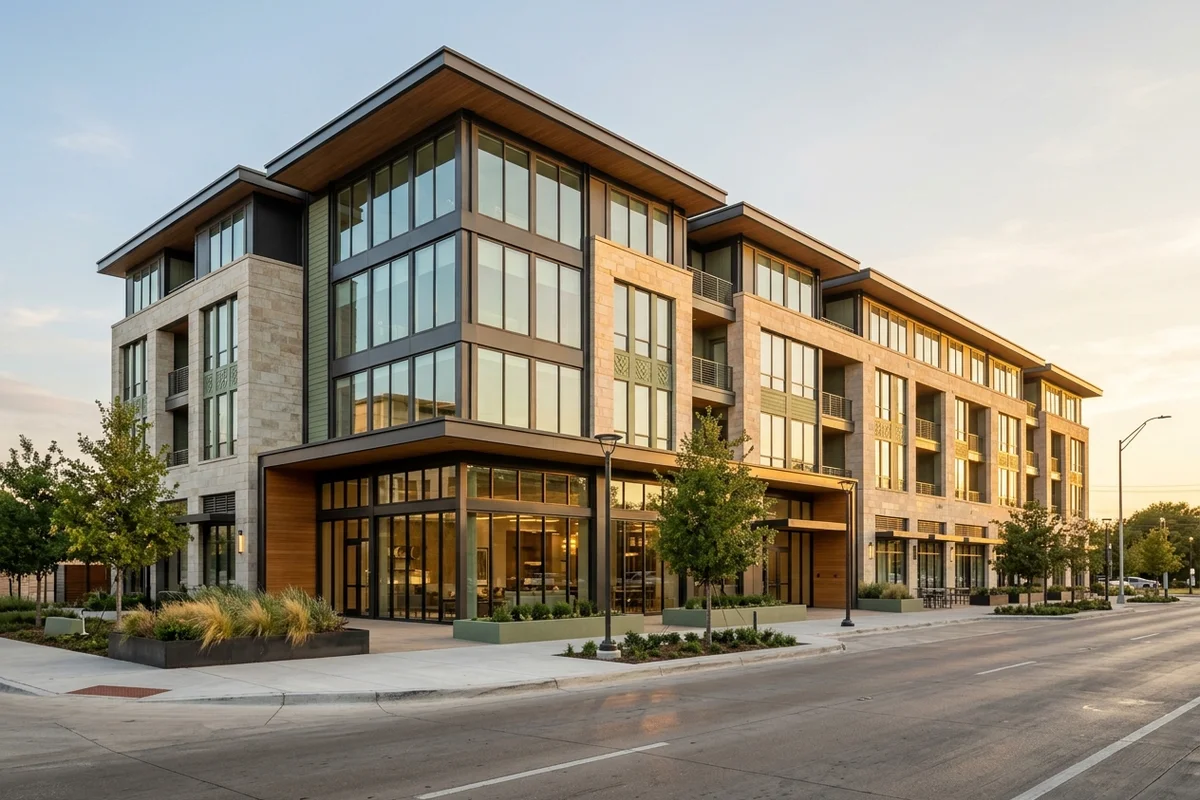
What are 55+ new apartments?
Have you noticed how many 55+ new apartments are popping up exclusively for older adults? Moving from a large family house to a low-maintenance space is a major decision for many homeowners. We are a professional service team ready to help you evaluate your choices.
Age-restricted housing is actually a specific legal category. Under the Housing for Older Persons Act, a community can limit residency by age if it meets federal rules. You will see two common labels, which are the 55+ community and the 62+ community.
Our board of new apartments in Dallas features both of these categories when the building is ground-up new construction. Current new builds in Texas include several beautiful properties:
- Novum Plano in Plano
- Mera Craig Ranch in McKinney
- Promenade’s 55+ homes
- Elate Bent Tree
We are currently verifying the status of Elate Bent Tree because it is listed as 62+ by Greystar and 55+ by 55places. These properties are rental apartments, often marketed as an active adult community. They are not independent living facilities with services like daily meals or medical care.
We will gladly point out which buildings offer those specific care services if you need them.
The right information makes finding your perfect home much easier.
How do the age rules work?
Each community sets an occupancy rule within the federal framework. The famous 80/20 rule from the Housing for Older Persons Act requires that at least 80% of occupied units must have at least one resident who is 55 or older. This allows a small 20% margin for exceptions, but every property manages that allowance differently.
We always check these specific details before you fall in love with a floor plan. Certain communities might require 100% of units to meet the age requirement, leaving no room for younger spouses or adult children.
| Label | Typical rule | What to confirm |
|---|---|---|
| 55+ | At least one resident per household is 55 or older | Who else can live there, and at what age |
| 62+ | Every resident is 62 or older | Exceptions for caregivers or spouses |
Communities handle age verification at lease signing, usually with a government ID. A common pitfall is assuming an adult child can automatically move in later. You must verify the specific visitor and long-term guest policies because they vary widely.
We confirm the household rule in writing before you apply. The detailed information in our 55+ vs 62+ guide covers exactly how these categories compare.
Why these buildings sit on their own page
All 13 income- or age-labeled buildings on our board stay out of market-rate medians. Their rules and prices work differently, and mixing them in would skew the numbers on every other page.
What should you check on a tour?
New construction usually includes good basics, but layouts differ drastically across properties. Touring a property in person reveals the practical details that glossy brochures hide. We recommend paying close attention to the daily flow of the space.
Look at these essential elements during your visit:
- Elevator access in mid-rise buildings, and how far the elevator is from your door.
- Single-story units or ground-floor units if stairs matter.
- Accessibility features: walk-in showers, grab-bar backing, wider doors, lever handles.
- Parking and storage, especially if you are leaving a house with a large garage.
- True walking distances, measuring exactly how many steps it takes to reach the mailboxes or trash chutes.
Modern buildings must follow specific accessibility guidelines under the Fair Housing Act. This means you will typically find standardized doorway widths and accessible common areas in new developments.
We can help you put a request in writing if you need a specific change to a unit or a policy because of a disability. A formal request for a reasonable accommodation ensures the property management legally documents your needs. This protects your rights as a resident and guarantees a comfortable living environment.
What costs are new if you’re leaving a house?
Former homeowners often meet fee lines they haven’t seen before. Transitioning to an apartment means adjusting to a different structure for monthly expenses. We gathered data from a fee survey on October 25, 2026, showing required fees at 12 board buildings ran $43 to $226.88 a month, with a median of $141.50.
Texas law now requires landlords to clearly disclose all fixed, recurring fees on the first page of your lease agreement. This legislation, known as House Bill 4305, helps you spot unexpected charges before you sign.
We regularly see a few common extra charges added to the base rent in modern complexes. Understanding these typical costs prevents unpleasant surprises on your first billing statement.
| Fee Type | Typical Monthly Cost in Texas | What It Covers |
|---|---|---|
| Valet Trash | $25 to $40 | Doorstep garbage collection five nights a week |
| Package Management | $5 to $15 | Secure locker systems for your deliveries |
| General Amenity Fee | $5 to $40 | Upkeep for pools, fitness centers, and clubhouses |
Garages and storage can carry their own separate monthly charges, often ranging from $50 to $150 depending on the location. Some buildings also bill water back to residents based on a community usage formula.
Our house to 55+ apartment guide lists all of these potential fees and adds them up for you.
Are there income-restricted 55+ options?
Yes, affordable options absolutely exist within the active adult market. Promenade offers plans at 60% of the area median income alongside its standard 55+ homes. We always advise clients to verify their exact household income before touring these specific units.
The Texas Department of Housing and Community Affairs, known as TDHCA, sets these specific financial thresholds annually. Under 2026 TDHCA limits, 60% AMI for a two-person household is $58,140. A single person applying for that same tier faces an income cap of $50,880.
We frequently see applicants miscalculate their gross income by forgetting certain revenue streams. You must include all forms of compensation to determine your true eligibility, such as:
- Standard W-2 employment wages
- Social Security benefits
- Pension or retirement fund payouts
- Interest from significant investments
The detailed steps in our Dallas PFC and income-restricted guide explain exactly how to properly document these sources.
How do we help?
Moving requires handling countless small details, and our process takes that heavy lifting off your plate. We manage the research phase by providing these core services for every client:
- Verifying the exact age restriction label directly with the community
- Confirming the specific household rule in writing
- Pricing each building based on a true monthly cost with every fee included
- Mapping out property layouts to find units matching your exact needs
You can take tours at a comfortable pace, whether that means visiting in person or joining a live video call. Our team will also help you set up your electric service before move-in day arrives. Texas operates a deregulated energy market, which means you have to pick your own retail electric provider.
This system offers great freedom, but sorting through the dozens of options can feel overwhelming. We guide you through using the state’s official Power to Choose website to compare fixed and variable rates. Finding the best 55+ new apartments should be an exciting milestone, so call our office today to schedule your first consultation.