
What changes when you move from a house to a new 55+ apartment?
We see exactly what changes when you are moving from house to 55 plus apartment communities. The transition always comes down to three things: space, the monthly bill, and the paperwork. Many renters at 55+ new apartments are leaving a property they owned for decades. Before you tour, confirm which age label fits your household; our 55+ vs 62+ guide explains the difference.
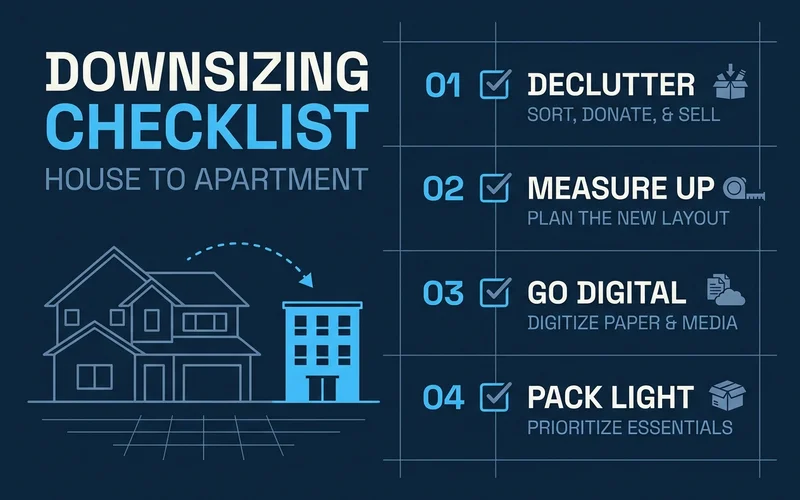
Our clients gladly trade the national average of 70 hours a year spent on yard work for a simple lease, a predictable fee sheet, and a reliable elevator. Here is your downsizing to apartment checklist so the trade works perfectly for your lifestyle.
Planning ahead prevents surprises.
How do you plan for space and storage?
Measure what you’re keeping
We recommend using a free digital layout tool like Magicplan to map out your furniture before you pack a single box. Measure your key items like the bed, sofa, dining table, and desk. Compare these numbers directly to the floor plan dimensions.
Our team finds that new apartment floor plans often use open layouts that fit quite differently than a traditional house. The average US apartment sits at just 911 square feet, so precision matters. Getting the measurements right saves you from moving furniture that simply will not fit.
Closets and storage units
We always tell clients to prioritize walk-in closets and in-unit utility rooms during their tours. Many communities also rent out separate, on-site storage units to tenants. Ask the leasing agent for the exact dimensions and the monthly cost.
Our experience shows that 55+ apartment storage units fill up fast. Reserve one early if you know you will need the extra space. Off-site storage facilities often charge significantly more than on-site options.
Garages and parking
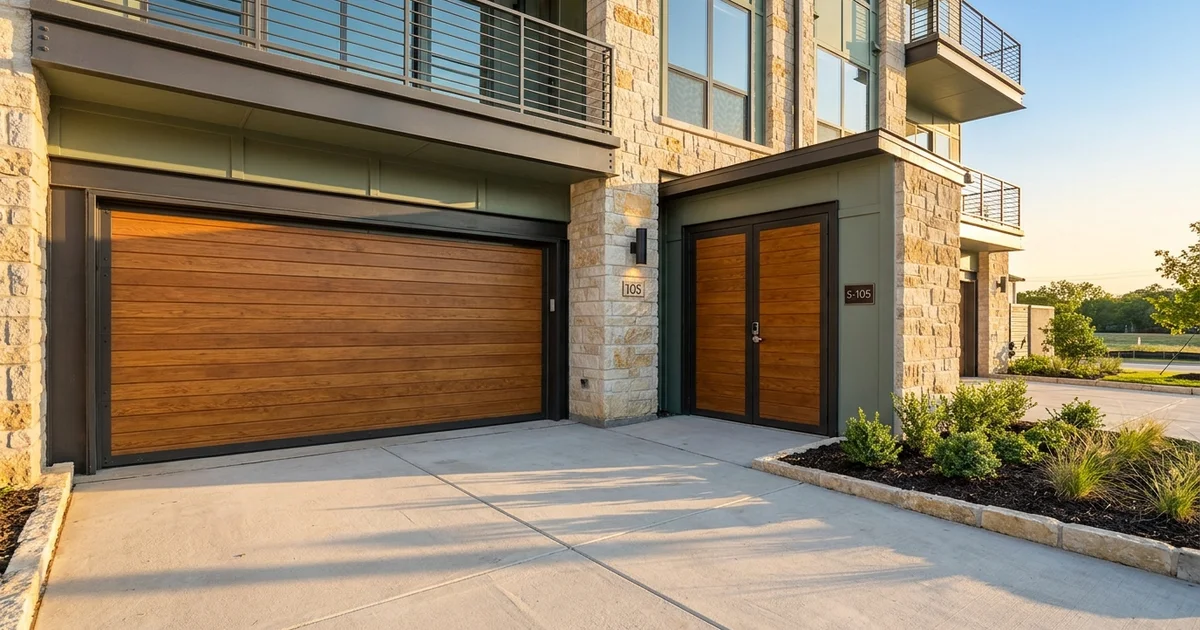
We often secure attached or detached garages for clients who want extra security. Some communities offer these spaces, usually at an extra monthly charge. The national average for a dedicated apartment garage runs between $135 and $175 a month based on 2026 data.
Our standard practice is to get the final garage charge in writing before anyone signs a lease. A garage is definitely worth the cost if you have a second car, a workbench, or bulky holiday decorations. Covered parking protects your vehicle from the elements and extends its lifespan.

What costs are new when moving from house to 55 plus apartment?
We track market data closely to show that your new costs will shift from property taxes and heavy repairs to predictable rent, standard utilities, and fixed community fees. The latest 2026 reports show the average US homeowner spends $8,808 annually just on routine maintenance. Renting eliminates those massive, unexpected repair bills.
Our required fees guide lists the common line items you can expect instead.
| Owning a house | Renting a new 55+ apartment |
|---|---|
| Mortgage or none | Rent (net effective after any special) |
| Property taxes and insurance | Renters insurance |
| Repairs and yard work | Mostly handled by the community |
| Utilities in your name | Some utilities, plus required fees |
| HOA dues (if any) | Required fees, garage, storage |
Required fees at 12 board buildings ran $43 to $226.88 a month, with a median of $141.50 according to the October 25, 2026 fee survey. Some buildings even streamline your bills by charging for water directly through the property portal.
We use a simple formula to give clients a clear financial picture.
Compare the full monthly number
Add rent, fees, garage, storage, utilities and renters insurance. Then compare that to your house costs, including taxes, insurance, repairs and upkeep.
What should you know about the lease?
You must pay close attention to four main areas before signing a contract: the term, renewal rates, age rules, and early exit clauses. A standard apartment lease is very different from standard homeowner paperwork. Our agents analyze hundreds of contracts to ensure the terms protect your interests.
- Term. If you are selling house moving to apartment, match the lease start to your closing date. A longer first term can delay your renewal timeline.
- Renewal. Renewals price from base rent, not any move-in special. Plan ahead for year two.
- Age rule. Confirm the community’s written occupancy rule for everyone in your household.
- Early exit. Know the termination terms if plans change, which typically require a penalty equal to two months of rent.
The federal Housing for Older Persons Act governs that specific age rule. This law requires that at least 80 percent of the occupied units have one resident aged 55 or older. We check that the community legally meets this strict 80/20 compliance standard.
That threshold is a strict legal floor, not a quota that guarantees younger residents can move in. Violating this rule can actually cause a property to lose its age-restricted status entirely.
What should you check on a tour?
Our team conducts detailed site visits to evaluate physical accessibility, noise levels, and parking logistics before you sign. Always evaluate these key physical features before making a final decision:
- Elevator access and distance to your door
- Single-story layout or ground-floor options
- Walk-in shower, grab-bar backing and lever handles
- Parking path from car to unit
- Noise from amenities or construction nearby
The Fair Housing Act allows you to request a reasonable modification if you need a physical change to the unit because of a disability. We remind clients that while the landlord must allow things like grab bars, the tenant usually pays for the installation in private housing.
Accommodations are completely free policy changes like securing a reserved parking spot. Having these details approved before moving in prevents unnecessary delays. Our staff can help you put any specific request in writing to ensure it gets handled properly.
How do we help?
The process begins by verifying essential community details for your specific transition:
- Age rule compliance
- Official fee sheets
- Written garage charges
Next, the team lines up the move-in date with your house timeline so everything flows smoothly. We will even help you set up electric service before your scheduled move-in day.
Having a local expert in your corner saves hours of stressful research.
Ready to finalize your plans for moving from house to 55 plus apartment living? Our proven strategy makes the entire transition effortless. Request your details today and Get my shortlist.