
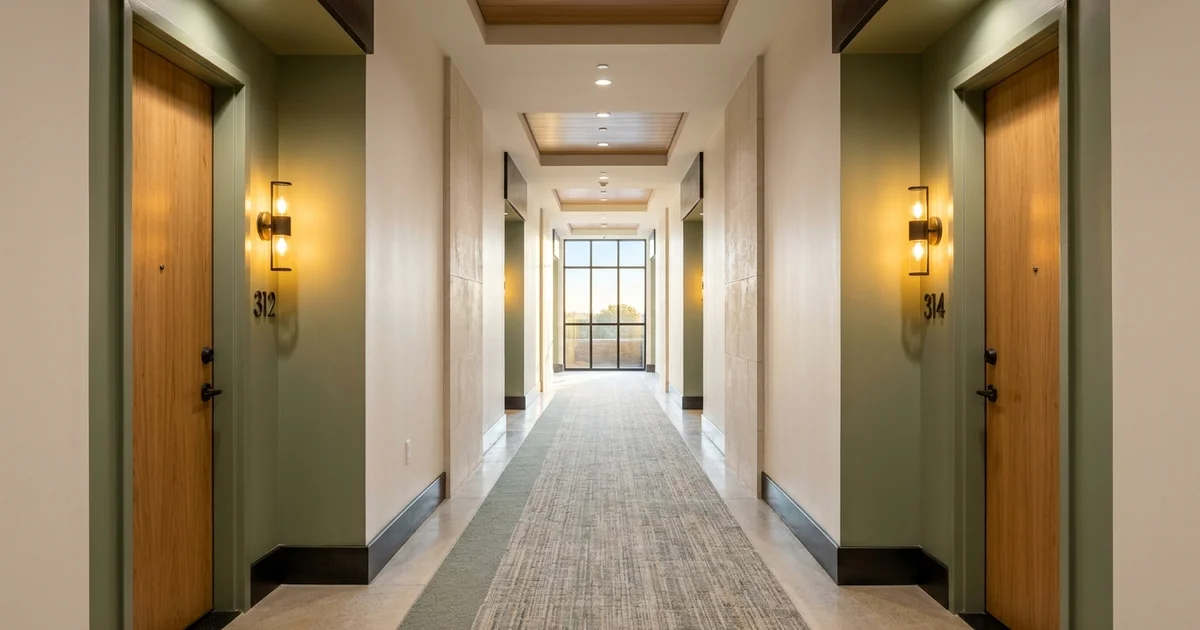
How do you pick the right unit in a new building?
Learning how to choose an apartment unit starts with a strict formula: pick the sun exposure, select the floor level, and evaluate the immediate neighbors. We see the same scenario happen every week.
Whether you are a business owner securing a corporate lease or a homeowner in transition, you find the perfect building but underestimate how much the unit location impacts daily life. At lease-up apartments, you often have a massive inventory to choose from right away.
This early access is a major advantage.
The exact same floor plan can easily cost 15 percent more or run up a huge electric bill depending entirely on its physical placement. Our team recommends checking the price differences only after you filter for your ideal sun and noise preferences. If phases are still delivering, read living in a building still under construction before you pick a side of the building.
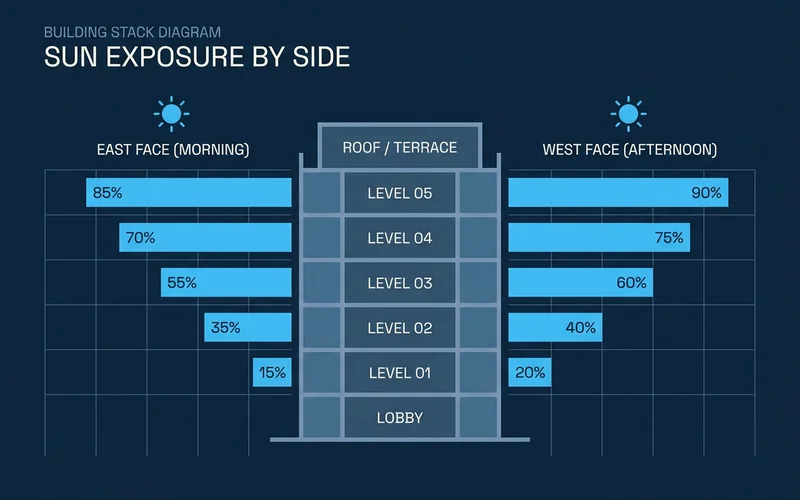
Which exposure should you choose?
The direction your windows face dictates your comfort level and your monthly utility costs. For optimal apartment unit orientation, Texas renters should choose north or east to avoid overworking their air conditioning.
We tell every client that this choice has serious financial consequences. Dallas design heat routinely hits 101°F in the summer.
A west-facing unit with large windows absorbs 200 to 300 watts of radiant heat per square foot during peak afternoon hours. This direct solar radiation can drive your energy consumption up to 26 percent higher than a comparable north-facing unit.
| Exposure | Afternoon sun | What to expect |
|---|---|---|
| North | Little | Even light, cooler afternoons, lowest AC costs |
| East | Morning only | Bright mornings, cooler afternoons, gentle warming |
| South | Moderate, high sun | Bright, manageable with shades |
| West | Strong | Warmest afternoons, highest AC use, extreme heat load |
If you work from home in the afternoon, north or east exposure usually wins. You will stay cooler and save money.
If a west-facing layout is your only option, verify that the building uses Low-E glass. Windows with a Solar Heat Gain Coefficient (SHGC) of 0.25 or lower reflect most of that infrared heat back outside. Our electric guide covers plan choices by address to help you forecast these costs.
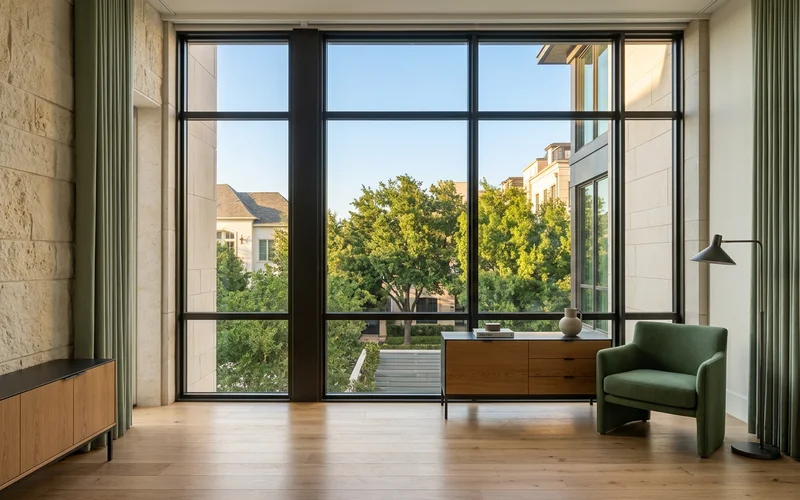
Which floor should you choose?
When deciding on the best floor to live on, apartment shoppers should target middle floors for value or top floors for ultimate quiet. Higher floors offer better views and less street noise, but they command a premium.
We typically see developers add a price bump of $10 to $30 per floor as you move up the building. A unit ten stories higher could easily cost you an extra $200 every month just for the elevation.
- Higher floors: Better views, less street noise, more privacy. Expect longer elevator trips and higher base rent.
- Middle floors: Often a perfect balance of moderate price and acceptable quiet.
- Ground floor: Easy access for business owners carrying inventory or homeowners with pets. Expect more foot traffic and street noise.
Understanding Sound Ratings
The 2021 International Building Code (IBC) requires an STC 50 sound rating between units in new multifamily buildings. This rating is helpful, but it can be misleading.
An STC 50 rating effectively blocks loud speech, but it does not stop heavy footsteps. Impact Isolation Class (IIC) handles that low-frequency thudding. Because standard construction struggles to block impact noise, choosing a top-floor unit is the only guaranteed way to ensure no one walks heavily above you.
Think about the stack
A stack is a vertical column of units with the same plan and orientation. If you like one unit, the same stack on another floor gives you the same layout and view direction, often at a different price.
What should you avoid being next to?
You must actively avoid sharing any walls with elevator shafts, trash rooms, or amenity decks. These areas create mechanical vibrations and foot traffic that ruin your peace and quiet.
We advise clients to specifically stay away from the core building mechanics. Elevator shafts act as massive resonators. They transmit low-frequency energy, typically between 80 and 200 Hz, directly through the concrete slabs and into adjoining apartment walls.
Check the architectural layout for these specific noise traps:
- Trash chutes and trash rooms: Constant door slamming, rolling bin noise, and occasional odor.
- Elevators: Convenient access, but frequent mechanical humming and vibration.
- Amenity decks, gyms, and pools: Dropped weights and loud music during nights and weekends.
- Garage entrances and loading zones: Early-morning delivery trucks and reversing alarms.
- Active construction: In phased developments, always face your windows away from the next phase.
Close proximity is excellent for the mailroom and your assigned parking spot. Being right next door is much less desirable for the trash room. If you are stuck sharing a wall with the elevator, placing a large, heavy wardrobe against that shared wall can reduce the perceived noise level by up to 7.6 decibels.
How do unit prices differ?
Within a single new building, the base rent fluctuates drastically based on the floor level, view, exposure, and square footage. Concession specials vary just as much across different floor plans.
We use a strict calculation to find the true cost of a lease, because an “up to two months free” promotion might only apply to the least desirable layouts. The inventory feed shows the starting price by unit when it is available, and our agents confirm the exact number for the specific unit you want.
You must compare units the exact same way you compare buildings. Always calculate the net effective rent plus mandatory fees for the first year, and then forecast your costs for year two.
The Year Two Math
This is where understanding apartment stack pricing becomes crucial. A higher base rent stings twice.
If you accept a unit with a $50 higher base rent because of a free-month special, that unit costs $50 more every single month of year two when the special expires. Every property card on the New Build Board shows this exact math so you can make an informed financial decision.
What should you check on the tour?
A physical tour is your best opportunity to verify window exposure and test ambient wall noise before signing a lease. You should treat the walk-through like an inspection rather than a casual visit.
Our team recommends bringing a few digital tools on your phone to gather hard data. Use a compass application to confirm the exact window exposure, and download a free decibel reader like the NIOSH Sound Level Meter to test ambient noise.
Run through this specific checklist while inside the unit:
- Stand at the window: Do this at the time of day you will be home the most to check the glare and heat.
- Listen at the walls and the door: Check for elevator hum or hallway conversations.
- Walk the exact route: Time the walk from your designated parking spot to the front door.
- Ask about the empty lot: Find out exactly what construction is planned for any vacant land your windows face.
Taking these steps ensures you are buying into a comfortable environment, rather than a hidden construction zone.
What’s the next step?
Now that you know how to choose an apartment unit, tell us your exact exposure and floor preferences to start the search. The final phase is securing the layout that fits your lifestyle parameters.
We will immediately request the specific units that match your criteria. Next, the team confirms their current prices and move-in specials in writing. Reach out to Get my shortlist and start the process today.