
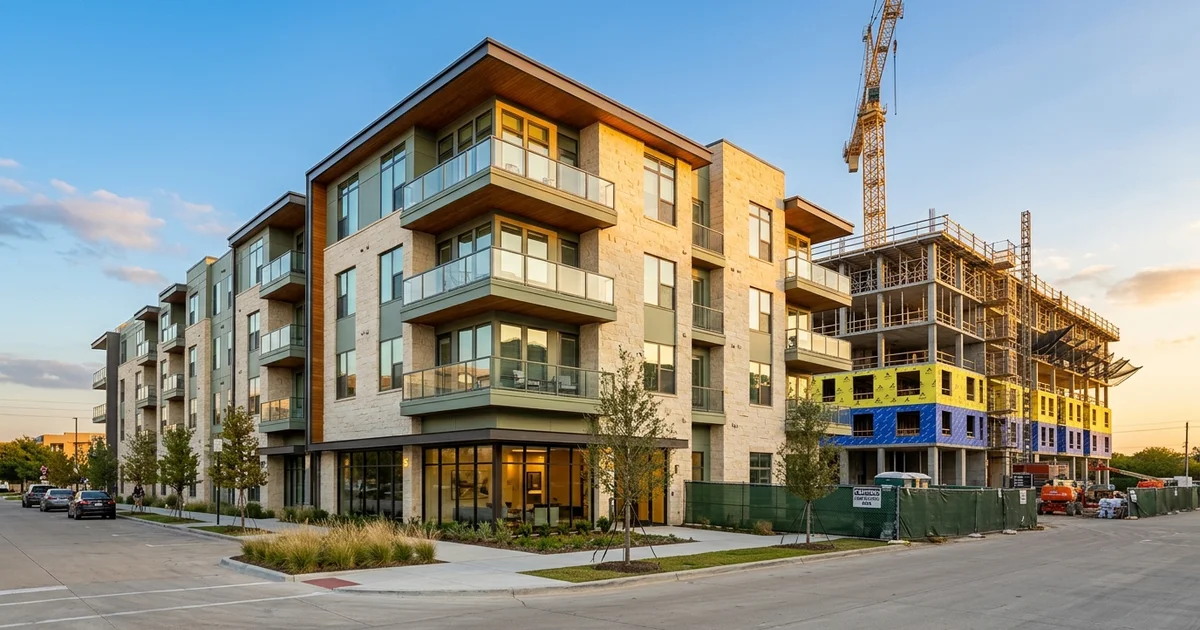
What is it like to live in a building still under construction?
Moving into an apartment still under construction is a classic trade-off between savings and sanity. You secure an incredible deal on a brand-new space, but you trade quiet mornings for active job sites.
Our team recommends this strategy only if the financial upside outweighs the temporary disruption. Many lease-up apartments in the US open in stages to generate early revenue. Timing your move perfectly is what secures the best specials.
We will break down exactly what to expect and explore a few practical ways to protect your peace.
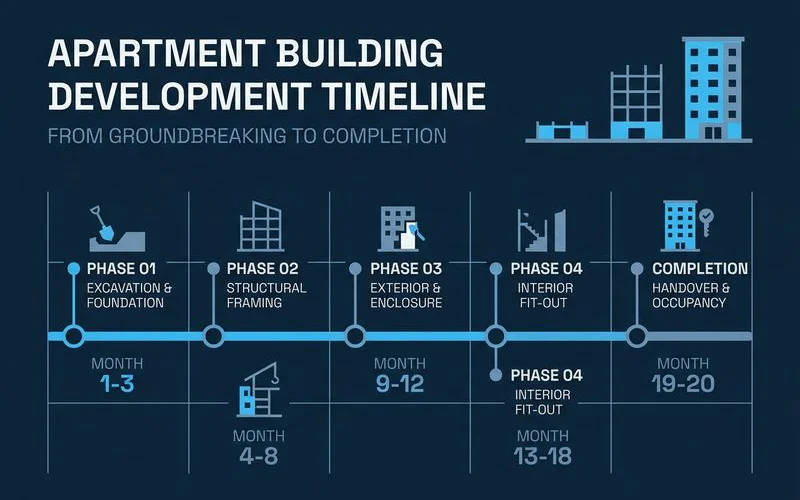
How do phase deliveries work?
Understanding a phased apartment delivery starts with local building codes. Each distinct section of the property must earn its own US Certificate of Occupancy before residents can move in.
Our agents always verify these certificates to ensure your specific floor is fully cleared for safety. This means a property can legally welcome tenants into one wing while framing continues next door.
The Census Bureau’s 2026 Survey of Market Absorption shows new buildings are taking much longer to fill. We see this slower pace forcing developers to rely heavily on staggered openings. These stages usually follow a predictable timeline.
| Phase | What’s open | What’s still active |
|---|---|---|
| Phase I | First building or floors, leasing office | Later buildings, most amenities |
| Mid-delivery | More buildings, some amenities | Remaining buildings, landscaping |
| Completion | Everything | Punch-list work |
Ask the leasing staff exactly which phase your targeted unit falls under.
What should you expect day to day?
Daily life in a developing complex involves walking through active work zones. You will experience temporary pathways, early morning activity, and noticeable environmental changes.
Our clients frequently report that these disruptions are manageable if you plan ahead.
Apartment construction noise
Construction sound is the single most common complaint during a lease-up. The US Occupational Safety and Health Administration limits regular residential workplace noise to 90 decibels for an 8-hour shift.
We advise clients to take that number seriously. Heavy equipment like cement mixers easily generate 85 to 90 decibels, while pile drivers can reach 120 decibels.
Living directly next to that activity will test anyone’s patience. Our top recommendation is to select a unit on the far side of the property. A building acting as a physical shield makes a massive difference in your daily comfort.
Temporary access routes
Getting from your car to your front door will likely change multiple times. Expect fenced detours, shifted parking zones, and temporary mailroom locations.
We always ask property managers for a printed map of the expected pedestrian routes. This helps you visualize the actual walk you will take during the first three months of your lease.
Dust and deliveries
Drywall and silica particles from the site will inevitably find their way into your space. Standard MERV 8 HVAC filters do a poor job of catching fine construction dust.
We recommend asking maintenance to install a MERV 11 or MERV 13 filter before you move in. These higher-rated filters capture particles down to 0.3 microns, protecting your lungs without burning out the blower motor.
Expect to see supply trucks blocking the driveway frequently during normal business hours. Our property checklist includes confirming a dedicated delivery zone for resident packages.
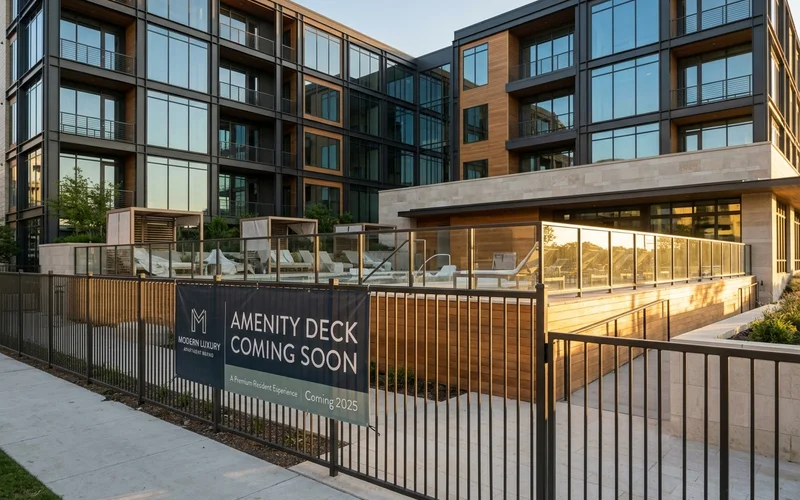
What about amenities that aren’t open?
Dealing with amenities not finished in a new apartment is standard practice for early phases. Pools, fitness centers, and rooftop lounges often debut weeks or months after the first move-ins.
We tell every client to request a firm target date for these openings. If you are paying a mandatory monthly amenity fee, you should not pay for closed facilities.
There is rarely a legal entitlement to a rent reduction in the US unless it is specified in your contract. Our firm successfully negotiates fee waivers for clients by requesting them as an upfront concession. You must ask for this credit before signing the final paperwork.
Get it in writing
Completion dates, amenity opening dates, and any credit for delays belong in writing, ideally in a lease addendum. A verbal promise at the leasing desk doesn’t follow you if staff changes.
How do you pick a unit in a phased building?
Choosing the right floor plan requires looking at the site map through a strategic lens. You want to maximize your distance from the active machinery.
We use a specific set of criteria to evaluate every available option. This method minimizes your exposure to the daily disruptions. Keep these rules in mind as you tour the property:
- Face away from the active phase to use the finished structure as a sound barrier.
- Pick a higher floor to reduce street-level noise and prevent dust from blowing directly into your windows.
- Ask about the path from parking and the mailroom during the remaining construction phases.
- Check your unit’s systems, because newly built apartments often have minor defects that need addressing.
Our unit selection guide covers floor placement, stack variations, and exposure directions in detail. Reviewing that guide is the best way to ensure you pick a winner.
What should you check at move-in?
Brand-new units almost always require a minor punch list of repairs. You might find a missing cabinet knob, a scratched floorboard, or a leaky faucet.
We advise completing the official move-in condition form within 48 hours of getting your keys. The sponsor or developer usually has a commercially reasonable timeframe to fix these issues. Focus your walkthrough on these high-priority items:
- Plumbing fixtures for slow drips or low water pressure.
- Cabinet hardware for loose hinges or missing screws.
- HVAC vents for proper airflow and clean filters.
Doing a preliminary inspection a day or two before your official lease start date saves a lot of headaches.
Our standard process includes sending a follow-up repair list at day 7 and day 30. You can access the exact framework used by professionals in that tour and move-in checklist.
How do specials compare at phased buildings?
Property managers use aggressive rent concessions to offset the inconvenience of living near a job site. U.S. rental data from 2026 shows that developers are offering up to two or three months of free rent to stabilize new deliveries.
We closely track these incentives to help clients find the highest value. The upfront savings are fantastic, but you must plan for the renewal cliff in year two.
When your lease ends, the management company will base your renewal offer on the gross base rent, not the discounted effective rate. Our data from October 2026 shows that second-year renewal prices jumped by about 20% across the board. Budgeting for that future increase prevents a nasty surprise down the road.
What’s the next step?
Tell us how much construction you can comfortably tolerate. The perfect balance of price and peace of mind looks different for everyone.
We will confirm the exact phase status, verify the work hours, and lock down amenity dates in writing for every building on your list. Reaching out today ensures you secure the best unit before the specials disappear.
You can request your custom options right now and get my shortlist.