
How do roommate leases work at new buildings?
Our team reviews dozens of multi-tenant applications every week. Finding new apartments in Dallas requires everyone over 18 to apply and sign the same paperwork. We call this standard arrangement a joint lease.
The Texas Apartment Association (TAA) standard contract uses a legal framework called joint and several liability.
Our leasing specialists explain that this rule makes every single signer responsible for 100% of the rent. If your roommate suddenly moves out, the property manager can legally demand the entire balance from you. We see this catch property owners and transferring professionals by surprise.
The landlord ignores private arrangements about splitting bills. We are going to break down the income rules, cost divisions, and floor plan details to help you prepare.
How do income tests work with roommates?
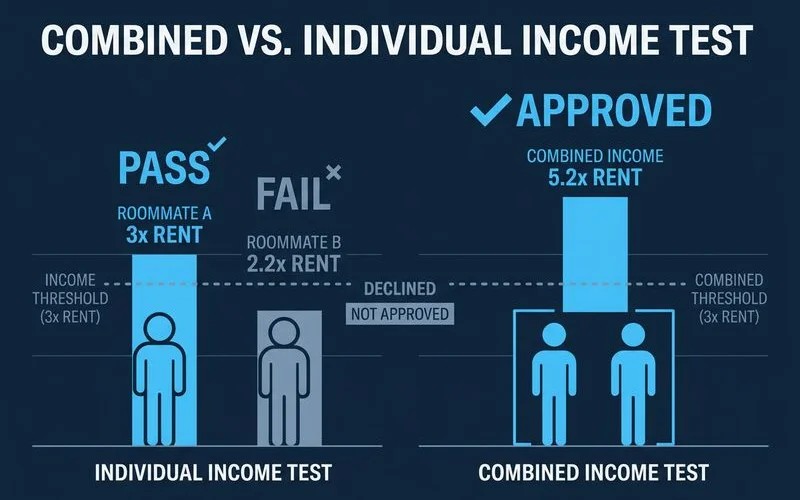
Our agents verify income policies before submitting any client applications. Most Dallas properties require your gross monthly income to equal at least three times the monthly rent. We find that a typical $2,100 two-bedroom unit demands $6,300 in total monthly earnings for 2026.
Properties evaluate these numbers using one of two specific methods. We see communities use either a combined test or a strict individual threshold.
| Method | How it works | 2026 Example on $2,100 rent |
|---|---|---|
| Combined | Add everyone’s gross income together | $6,300 total between you |
| Individual | Each person must meet a share or the full amount | Varies by the property manager |
The income requirement guide from our team explains how some communities test against base rent while others use the net-effective rent after discounts. The math changes significantly depending on the building policy. We confirm the exact calculation rule before anyone pays a non-refundable fee.
Before anyone applies
Every roommate pays a separate background check cost, which averaged $50 to $100 per person in Dallas during 2026. Our best advice is to confirm that every roommate qualifies under the specific building rule before handing over cash.
What about per-bed leasing?
A per-bed lease allows you to rent a single bedroom while the management company fills the remaining spaces. Your financial liability stops at your own bedroom door.
We only see this model frequently around university hubs like SMU or UTD. Conventional new buildings in popular neighborhoods like Uptown rarely offer individual liability contracts. Our database shows that almost all standard luxury apartments insist on joint leases.
One community on the new build board, Oxenfree, occasionally tests per-bed leasing for specific units. We are currently verifying their active policies for the 2026 leasing season. Just tell your representative if this specific structure is critical for your plans. Our team will contact property managers directly to find accommodating options.
How should roommates split costs?
Our recommendation is to settle cost divisions in writing before submitting the official application. This private contract prevents arguments over daily expenses and utility deposits later. We divide the typical shared apartment costs into a few distinct categories.
Rent
Equal rent splits work well for symmetrical floor plans. Unequal bedroom sizes or exclusive access to a private bathroom easily justify an uneven division.
We remind clients that the lease agreement does not care about your personal math. The community simply requires one full payment on the first of the month.
Required fees
New Dallas properties enforce mandatory monthly fees beyond the base rent. Our October 2026 fee survey across 12 buildings showed required extras ranging from $43 to $226.88 per month, with a median of $141.50.
These costs apply to the whole unit rather than the individual person, so you should split them just like the rent. We typically see these charges cover specific property services:
- Valet trash collection
- Monthly pest control
- Connected community package lockers
Electric
The utility account typically goes into a single person’s name. A Dallas resident at an Oncor or TNMP address has the freedom to shop for a retail electric provider. We suggest choosing one person to manage the account and collect monthly reimbursements via a payment app.
Addresses serviced by CoServ or GP&L force you to use their specific municipal co-op. Our electric guide covers the $200 to $400 deposits these co-ops often require from new customers. You need to decide exactly how the other roommates will repay their share of this initial deposit upfront.
What should you settle before applying?
Our best advice is to settle who signs the lease, how you will split the rent, and the planned lease length before applying. Clear communication prevents the classic disputes that ruin rental relationships. We highly encourage discussing these specific points before anyone pays a screening fee.
- Who signs. Everyone living in the unit over age 18 must pass a background check and sign the joint lease.
- The split. Determine exactly how you will divide base rent, mandatory amenity fees, electric bills, water, and monthly parking charges.
- What happens if someone leaves. Decide who holds the responsibility for finding a replacement roommate, and verify if the property manager even allows mid-lease tenant swaps.
- The term. Verify that everyone’s life plans fit the contract length, especially since many 2026 rent specials require a 15-month commitment.
- Pets. Bringing a dog or cat triggers non-refundable pet fees and monthly pet rent that apply to the entire unit balance.
Which floor plans work well for roommates?
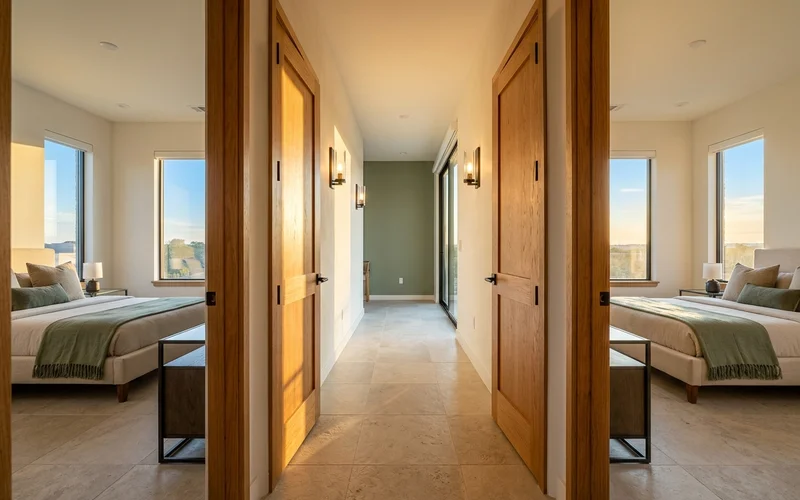
Our standard advice is to hunt for two-bedroom, two-bath layouts known in the industry as “roommate” plans. These specific designs place the bedrooms on completely opposite sides of the central living area. We consider this separation essential for maintaining privacy when sharing a space.
Most modern Dallas mid-rises feature this layout prominently. Sound transmission remains a huge factor for shared apartments. The 2021 International Building Code (IBC) requires new construction to meet a Sound Transmission Class (STC) rating of 50 between separate units.
We warn renters that interior walls inside your own apartment do not follow this strict standard. A shared wall between two bedrooms might only have basic drywall insulation. Our agents always recommend tapping on the interior walls during your tour to test the acoustics.
What’s the next step?
Our platform makes comparing your local housing options fast and straightforward. You can easily browse two-bedroom plans on the New Build Board right now. We are ready to help you narrow down the exact properties that fit your group.
Send over your target move date and combined budget limits. Our experts will gladly confirm each building’s specific roommate income rule before anyone pays a dime. Get my shortlist today.